

Start with the materials
A refrigerator enquiry can easily begin with litres and a smart-looking display. Start instead with the requirements of the materials to be stored: their documentation, required conditions, packaging dimensions and normal workflow. Do not assign a familiar temperature to everything. The responsible specialist determines suitability using the relevant documentation. This article helps structure an equipment enquiry; it is not a storage procedure for reagents, medicines or biological specimens.
Separate three questions
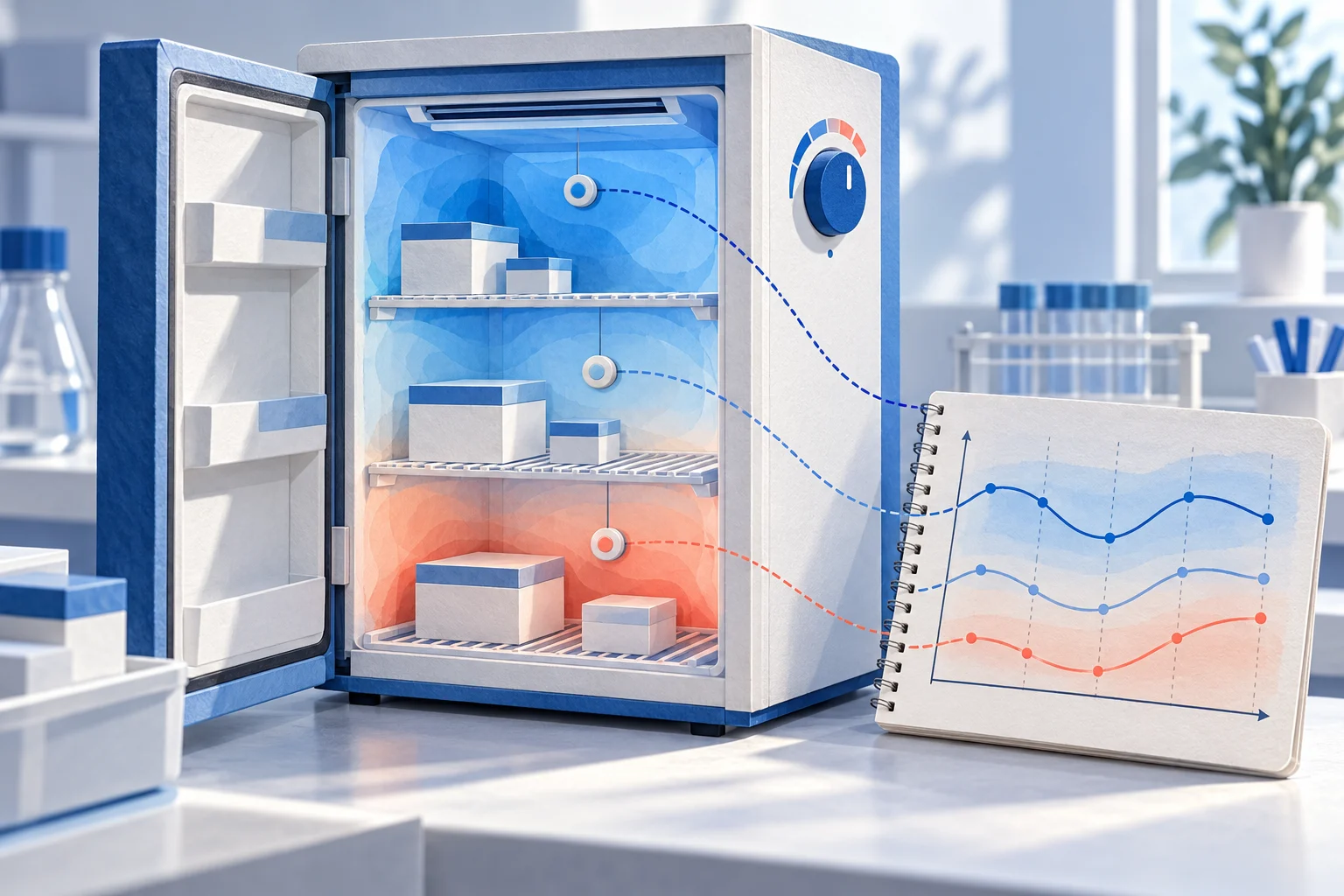
A setpoint is a setting, a sensor reading concerns its measurement, and temperature mapping examines a space. WHO describes mapping as recording and mapping temperatures across three-dimensional spaces, including refrigerator units. [1] A photograph of a display therefore does not replace a temperature-distribution report. For a purchasing team, the useful question is not only which value can be selected, but which evidence supports conditions in the areas that will actually hold materials.
Discuss the intended load
Give the supplier typical box dimensions and your proposed shelf arrangement. The Thermo Scientific Forma manual separately addresses reaching operating temperature and the influence of air circulation on temperature uniformity. [2] This illustrates why the proposed model’s own instructions matter: do not transfer clearances or waiting times from another appliance. Ask a qualified specialist to define the verification plan for your configuration. This article does not prescribe sensor positions or universal acceptance criteria.
Give the alarm an owner
Our practical discussion point is simple: who will notice an alarm outside working hours, and what happens next? An audible signal in an empty room and a message reaching an assigned colleague are different capabilities. Do not assume remote notifications are included. Ask for a demonstration of the agreed scenario, a list of required components and a way to test that arrangement. Also establish how records can be exported for review and who is authorised to change settings. An alarm checkbox alone is not an operational plan.
Write a one-page decision record
Use five fields: material requirements; exact equipment configuration; agreed verification and report; alarm responsibility; record retention. Separate documented capabilities from options and unanswered questions. Ask which documents arrive with the equipment and which services require a separate agreement. After delivery, compare the actual contents with the approved list. A price, a catalogue entry or an attractive demonstration does not by itself establish suitability for your process. Keep the unanswered items visible rather than quietly converting assumptions into specifications.