
A scale can have an attractive display and the right buttons yet be a poor fit for your workplace. When buying a platform model, describe not just the person to be weighed but also the wheelchair, surrounding space and staff workflow.
This is a plan for a supplier conversation, not instructions for weighing or transferring a person. The chosen model’s documentation and trained professionals determine the specific actions, assistance and permitted conditions.
Start with one real workflow
Record where the scale will stand, who will use it and which wheelchairs will approach it. If several departments need the equipment, do not reduce their requirements to the vague word “universal”. Ask each department to identify its constraints.
A short table is enough for the initial enquiry: location, wheelchair type, responsible person and required way of recording the result. Mark unknown parameters separately. This helps obtain comparable answers without asking the purchasing team to independently select a clinical workflow.
Tare does not add load capacity
In the seca 677/676 manual, TARE separates additional weight from the result, and tared weight reduces the available display limit. HOLD retains the displayed result. The manufacturer also requires wheels to rest on the weighing-sensitive surface, not the transition to a ramp.
Separate three questions in your enquiry: what total load the configuration permits, how it accounts for the wheelchair and what the displayed result represents. Do not accept an answer limited to the presence of a TARE button. Ask the supplier to identify the relevant section of the exact version’s manual.
Check the working surface, not just overall dimensions
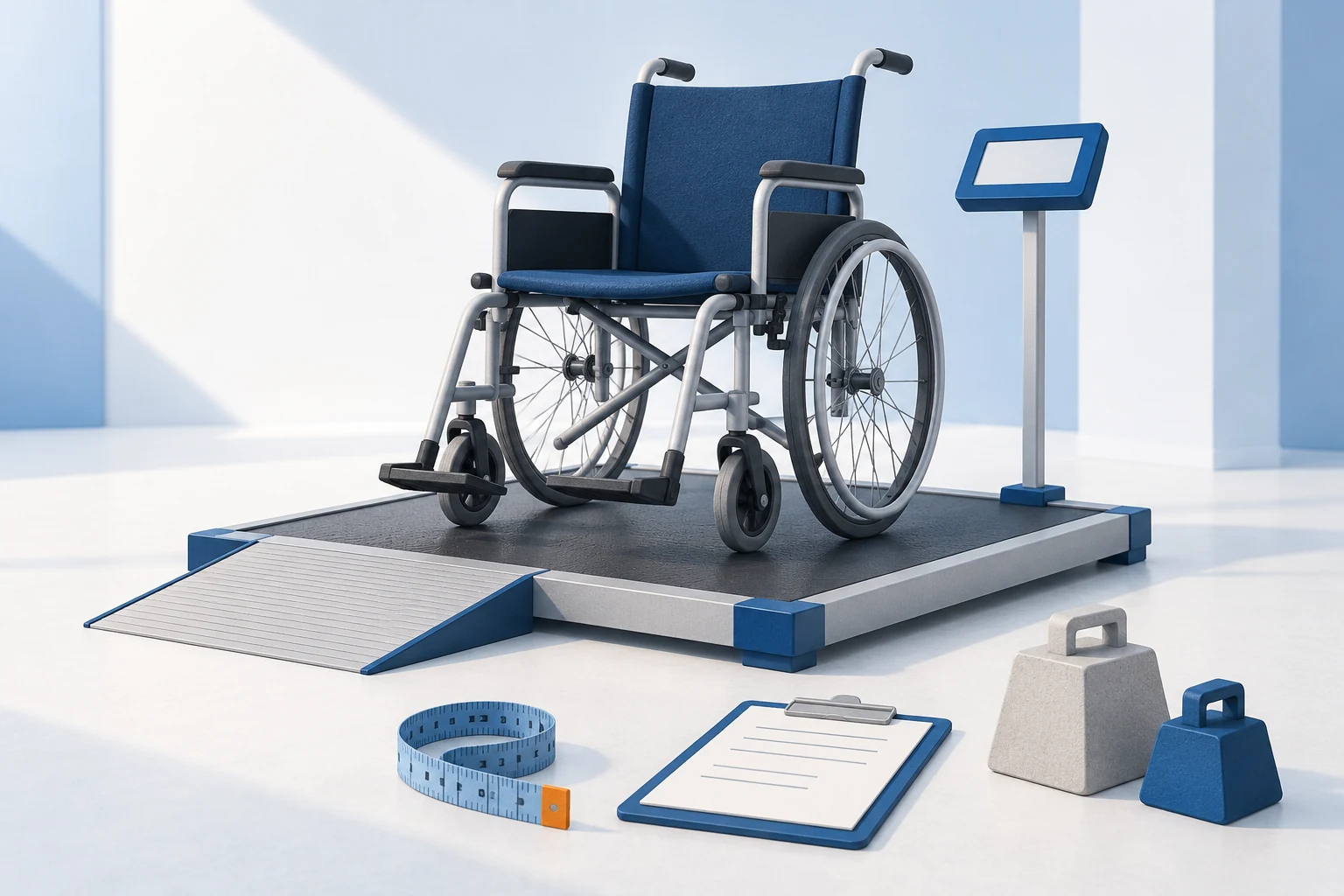
Request a drawing identifying the platform, ramps and overall installed footprint separately. Record each wheelchair’s actual dimensions and wheel positions. Do not substitute seat width or an advertising photograph for this information.
Plan a compatibility review with the supplier without a patient during the initial inspection. Ask them to show how wheelchair measurements compare with the platform’s working area. If different ramps or accessories are needed, list them as separate items in the quotation.
Agree what the demonstration will cover
Write an acceptance-demonstration outline: model identification, package reconciliation, display explanation and functions shown according to the manual. Have the responsible specialist agree in advance which checks are appropriate and who will perform them.
Do not simply ask a demonstrator to “show accuracy” without criteria. Clarify the documents, equipment and competence needed for the agreed checks. A tour of the menus is not a substitute for proper verification of measurement performance; this article does not prescribe that verification method.
A complete package costs more than a platform alone
Compare the same list: platform, indicator, ramps, power supply, installation, training and any additional capabilities you need. Mark what is included, optional or still unconfirmed. Do not transfer one seller’s package contents to another quotation.
If results must be transferred, request a description of the complete data path and a separate compatibility check with your system. A connector name or mention of software is not an implementation plan. Agree access, ownership and support responsibilities before ordering.
Finish with a written specification
Keep the exact model and version, agreed package, drawing and unresolved questions in a single enquiry. Add the quotation date and the contact responsible for clarifications. This is more useful than comparing isolated numbers from several screenshots.
This article uses the seca manual to illustrate terminology, not to recommend that model or transfer its rules to other scales. In the FORMED VIP catalogue, check each product’s sources separately. This article does not confirm prices, availability, package contents or suitability for a particular institution.
Sources and limitations
Primary seca 677/676 instructions, revision 2025-08S, reviewed on 25 October 2026: pages 49–51, TARE/HOLD and wheel positioning. The remaining text is an original procurement-question plan. Other models’ specifications, prices and availability were not verified.
- seca 677/676 — Instructions for use, 2025-08S ↗ · pp. 49–51